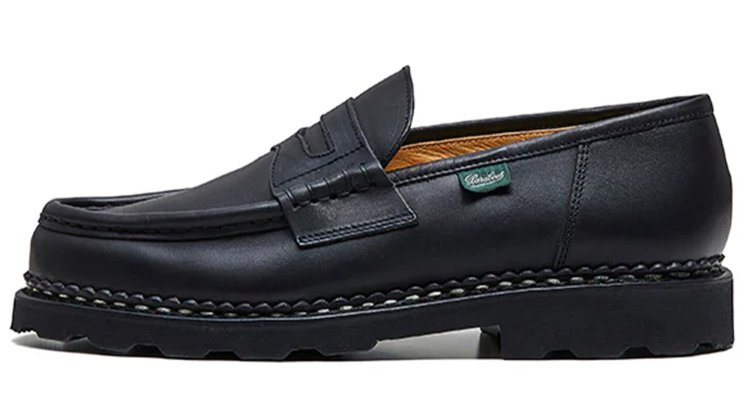
Paraboot’s ” REIMS ” are a pair of coin loafers with various charms not found in other coin loafers. The thick moccasins derived from Tyrolean shoes and the thick-soled sole that looks like a boot are different from those of ordinary loafers, making them useful in any season. In this issue, we will delve into the materials, manufacturing methods, and details of the ” Lance ” to find out why it has been supported for so long. The last part of the article is organized in a Q&A format to help you choose the right size and other things you need to know before making a purchase.
CONTENTS
- What is the Paraboot | Coin loafers featuring a chunky upper combined with a heavy rubber sole!
- Explanation of materials, manufacturing method, and details! | 8 characteristics of Paraboot Lance
- Break down your questions before you buy! | Q&A about the Paraboot Lance
- What is Paraboot? | The French shoe brand that developed the world's first rubber sole for leather shoes
Sponsored by
Coin loafers featuring a chunky upper combined with a heavy rubber sole!
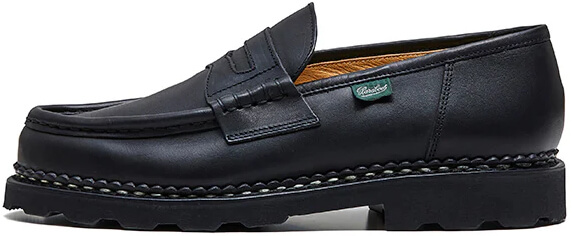
The Lance is a classic coin loafer by Paraboot. It is said that it was created in response to a strong demand from Italian customers, as it is common in Italy to wear thick-soled rubber-soled shoes on the feet of casual style. The brand was revived in 2009 due to the growing popularity of round-toe shoes and the requests of many fans. It is said to be a loafer model of the popular Paraboot model “MICHAEL,” and elements of Tyrolean shoes, which are the shoes of the mountain tribe, are incorporated throughout the design and manufacturing method.
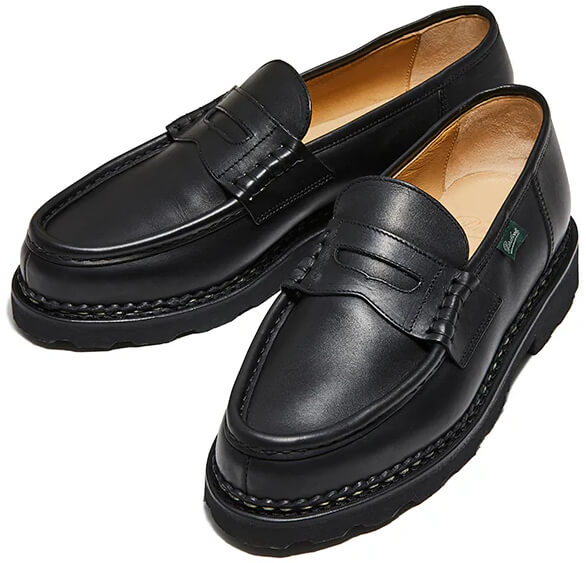
The greatest feature of “Lance” is the appearance that combines a chunky form with a thick rubber sole, which is different from general coin loafers. While they are loafers, they have the presence of shorts or boots, they are not only rugged, but also have an elegance that easily fits in with adult outfits.
Explanation of materials, manufacturing method, and details!8 characteristics of Paraboot Lance
Features of Paraboot Lance 1
The upper of the Lance is made of a unique leather called “Lisle Leather”. Lil’ leather is soaked in more oil than leather in general leather shoes, and is the brand’s signature material used in many of Paraboot’s products. The benefit of the high oil content is that it is naturally water repellent. Lance equipped with Lis leather can handle a little bit of water, so it can be worn on rainy days without any worries. Another feature is that the leather itself is not easily damaged, which is only possible with Paraboot’s roots in mountaineering shoe manufacturing.
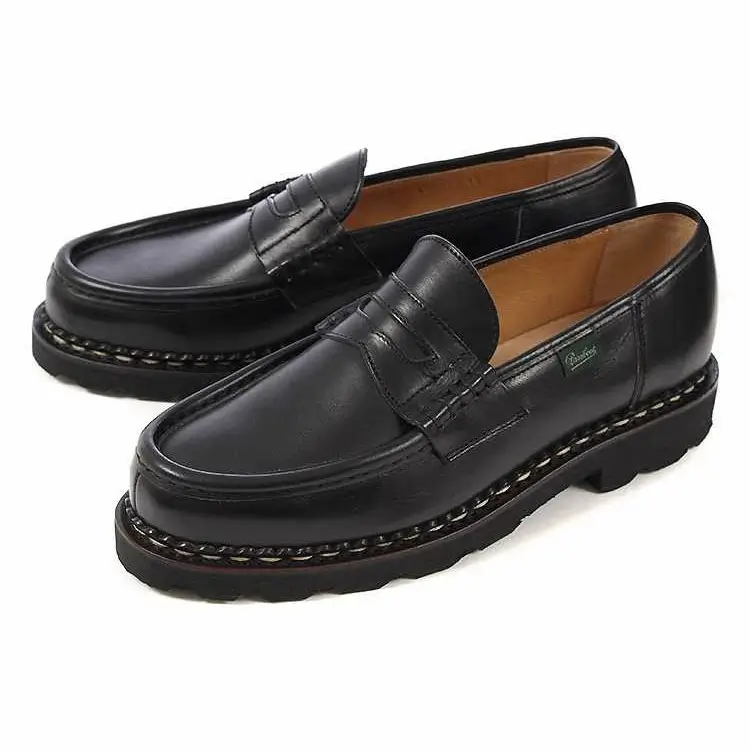

And the liss leather, called ” Cuirs Lisses ” in French, is not only practical but also looks beautiful. The base material is carefully selected top quality calf leather within 6 months old and tanned by one of the best tanneries in France. The tanning process is infused with oil, so it will not lose its oil content even after many years of use. Furthermore, the upper is cut at the optimum angle by Paraboot’s skilled craftsmen, who identify areas that are free of vein marks and scars. The highest quality leather is then oiled to give it a luxurious luster. The same luster is completely different from that of polished leather with a glass finish or calf leather polished with wax, and is so beautiful that it has been called “the jewel of France.
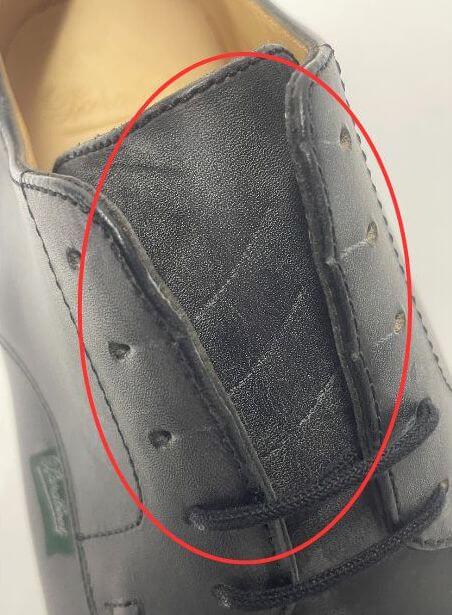
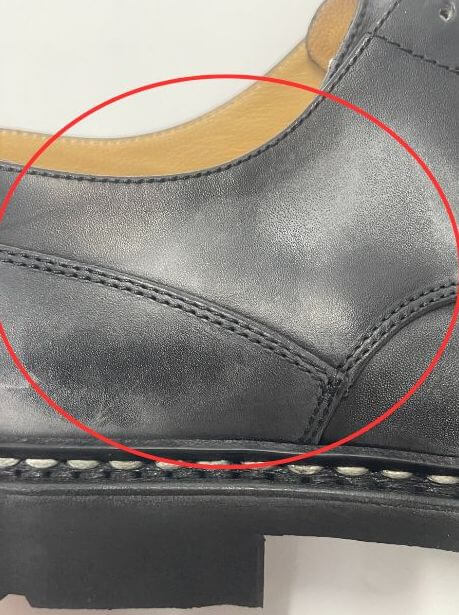
Incidentally, squirrel leather with a high oil content can develop a phenomenon called “bloom,” in which oil or wax is raised on the leather surface. This phenomenon, which causes the upper to turn white, is called “bloom. This phenomenon, which causes the upper to turn white, is evidence that the leather is healthy. Brushing will allow the oil to re-enter the leather and restore its original beauty. If blooming occurs, be sure to brush the leather instead of removing it with stain remover.
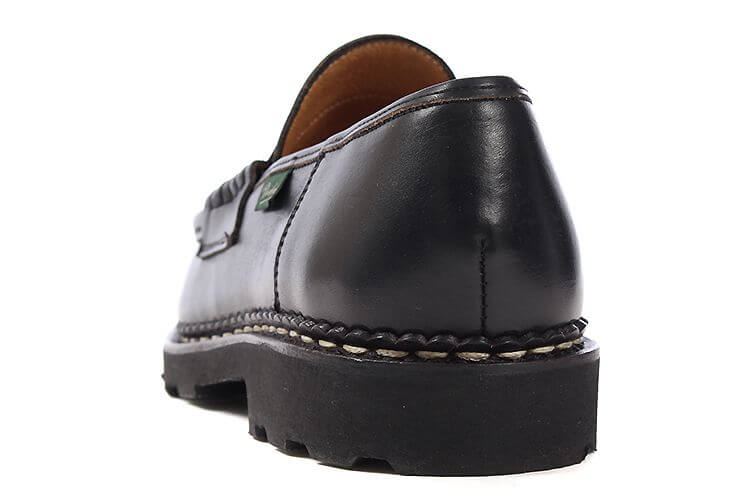
A stately silhouette & a heel so thick you would never guess it was a loafer
The massive silhouette, which is unusual for a coin loafer, is the most important feature that the Lance has. Generally, French brand loafers have a small, clean, and sophisticated silhouette, as represented by the J.M. Weston “180,” while the “Adonis” has a narrower silhouette, even for the same Paraboot. The Lance, on the other hand, has a silhouette so massive that it reminds one of outdoor shoes, giving it a unique presence among coin loafers, which tend to have a similar impression. The thick heel that supports such a massive upper silhouette is also noteworthy. The height of the heel is on the level of boots, and a slight leg-lengthening effect can be expected. The heel is thick and stable, and its exquisite weight sends the foot forward like a pendulum, so the foot does not get tired even after wearing it for a long time.
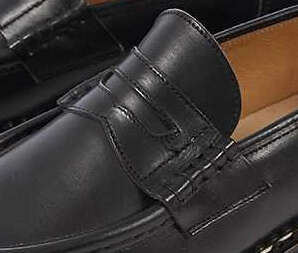
Paraboot 'Lance' features 3Large, hand-stitched half-saddle
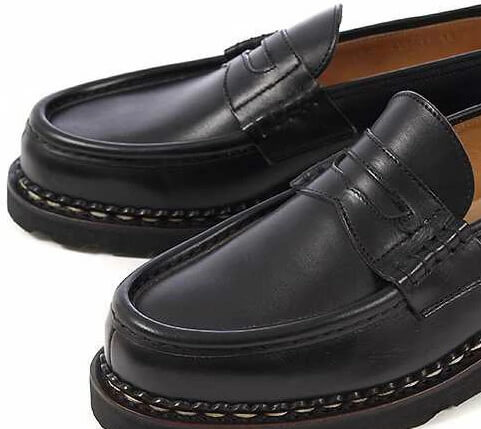
The saddle is the face of the loafer in design. The style of placing a one-cent coin in a slit in the saddle was once so popular that this type of loafer came to be known as a coin loafer. The Lance is a “half-saddle” design, which is the standard among coin loafer designs. The saddle is slightly thicker in length and width, and has a presence befitting its massive silhouette. Furthermore, both ends of the saddle are designed to resemble a ” beef roll,” a design wrapped with thread. This part is all done by hand, as it is necessary to secure the saddle and sew up the thick moccasins with a strong stitching.
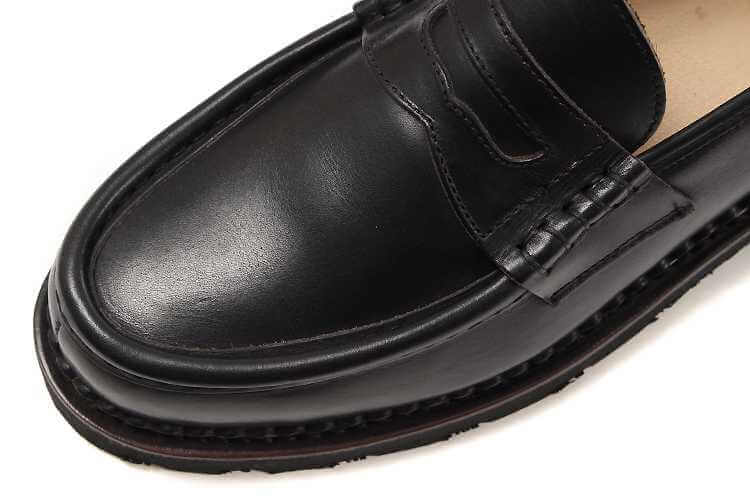
The U-shaped moccasin stitching is another important element of the loafer. The Lance moccasin is finished with a ” Kabuse-moca ” stitching technique, in which a separate part is stitched over the top of the loafer. Moccasins stitched with thicker threads make the silhouette of Lance more massive. Incidentally, the Chambord, one of Paraboot’s representative models, is made of two pieces of leather sewn together to form the “ogamocha” mocassin. Therefore, after a while of wear, the moccasin part may crack, a phenomenon known as ” moca cracking. The mocassin part of the mocassin may crack after some time of wear. There is a difference in opinion as to whether the cracking of the mocassin is considered an aging process or damage to the mocassin, but in the case of Lance with a mocassin, there is almost no concern about the mocassin cracking.
5 characteristics of the Paraboot LanceThe Norveigian method for durability and comfort
More than 150 processes go into each pair of The most time-consuming part of the manufacturing process is the soleing process, which is also used for the Lance. As the name suggests, the Norwegian manufacturing method, which is also used for Lance, originated in Norway and was originally adopted for outdoor shoes such as mountaineering and ski shoes. It has many things in common with the Goodyear welt method in that it involves a welt and cork is laid between the midsole and outsole, but the appearance is very different because the welt is turned outward. Another advantage of this method is that the L-shaped folded welt fills in the border between the upper and sole, preventing water from entering the gap between the welt and upper, which is one of the factors behind the stately silhouette. And it is said that the Norvegian manufacturing process alone takes two days, with more than 800 stitches. The benefits are numerous, and in addition to durability and water resistance, the comfort of the shoes after they have been acclimated to the foot is also excellent.
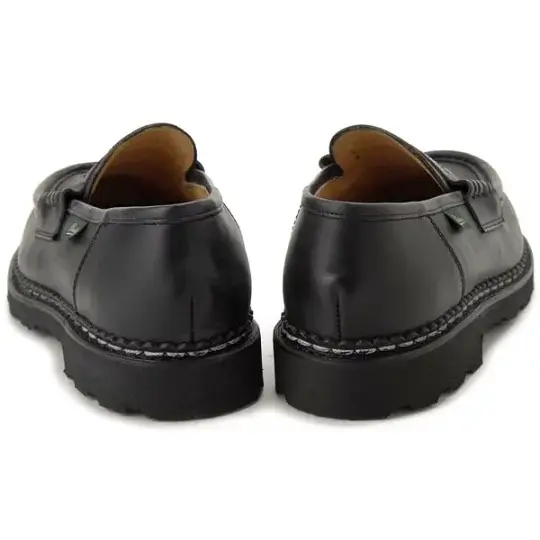
Characteristics of the Paraboot Lance 6Decorativeness with extra thick stitching, storm welt, and green tag
Upper and The two stitches that sew the welt together and the stitching that sews the welt to the sole are also visible. By using extra-thick threads, which are thicker than those used for ordinary dress shoes, not only is durability improved, but also the appearance is more spectacular and flamboyant, as if it were a decoration. In particular, the upper side uses white thread, which functions as an exquisite accent. The part of the L-shaped welt that touches the upper is also called the ” storm welt,” and as the name suggests, it guards against rain, wind, dust, and dirt. The decorative design of the Yamagata is also superb. And the green tag unique to the Paraboot also helps to highlight Lance’s originality.
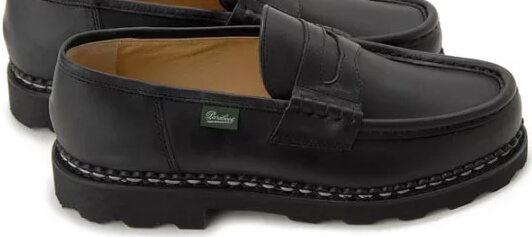
Paraboot Lance Features 7Calculated internal construction to prevent the calf from falling out
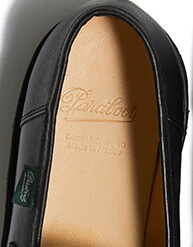
The insole and lining also The brand’s own high-quality leathers are used. The brand name “Paraboot” and the French words “Cousu Norvegien,” which indicate that the shoes are made by the Norvegian method, are engraved on the inner sole. Another feature of these shoes is that they have a large and deep opening. This eliminates both the stress of putting on and taking off the loafers and the problem of the heel slipping out while walking, which is a problem unique to loafers. In addition, only the heel part is switched to suede material and finished at a unique angle to prevent the heel from slipping out.
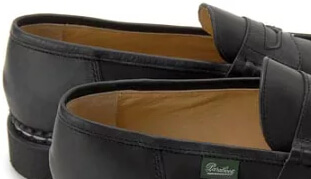
The outsole is of course made in-house! MARCHE II
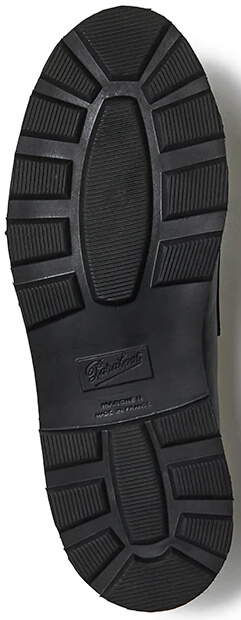
Paraboot is the one and only leather shoe brand that even manufactures its own outsoles. The company produces approximately 18 different rubber soles of varying thicknesses and tread patterns, with the most suitable outsole for each model. The Lance sole is one of Paraboot’s most famous rubber soles, ” MARCHE II “, which is made of 100% natural rubber and has a high grip and durability.
This sole has been delivered to the French Navy, and is perfectly water-resistant. The honeycomb-like structure of the inside of the shoe is also a feature, providing excellent cushioning by storing air. The unique tread pattern, which is rarely seen elsewhere, is designed to distribute power outward, reducing foot fatigue. The sole is also highly resistant to wear and has a long life span before it needs to be replaced.
Break down your questions before you buy!Q&A about the Paraboot Lance
Q1: How do I choose the right size for Lance?A: Basically, get the right size for your length!
Lance is not the type of footwear that changes the fit of the sole significantly because the inner sole is made of rubber that does not sink in as it is worn in. That is why, when choosing a size, you want to focus on the fit at the beginning of the shoe. Also, even though the squirrel leather is easy to fit to the foot, the leather does not stretch vertically to relieve pressure on the toes. Therefore, the basic rule is to avoid sizes that hit the fingertips from the start. If, as a result of prioritizing the length of the length, there is a slight excess in the withers, it is advisable to adjust the length with thick socks. This goes well with the rugged appearance of the Lance, and it is easy to balance the look of the shoe.
Q2: How is the grain leather version of the Lance different?A: A more casual look with a rough atmosphere all around.
As of April 2026, Lance is also available in a grain leather model. The grain leather models have a distinctly uneven surface, giving them a rougher look. If you value neatness and luster, squirrel leather is an option, and if you prefer a more casual look, grain leather is an option. Incidentally, grain leather uppers are also waterproof, though not as much as squirrel leather.
Q3: Can Lance be worn in the rain?A: Wearable. Lance is an all-weather shoe!
Lance is much more water-resistant than the average loafer. As mentioned above, the combination of oil-rich squirrel leather, rubber sole, and robust manufacturing process means that a little bit of rain is nothing to be nervous about. They are also considered all-weather shoes and can handle snow. However, they are only leather shoes. After prolonged exposure to strong rain, please dry them thoroughly, and then brush and moisturize them to keep them in good condition.
Q4: How should I maintain Lance?A: Brushing is the basic! Creams, oils, and waxes should be applied at a low frequency, about once every 1-2 months.
On a daily basis, brushing them after wearing them to remove surface dust. Also, since the squirrel leather used for the uppers is rich in oil, a phenomenon called “bloom” may occur, in which the oil comes out and the surface turns white. In this case, brushing will allow the oil to reabsorb into the leather and restore its original beauty. Since squirrel leather is rich in oil, it is not necessary to brush the leather frequently, but it is recommended to apply a cream, oil, or wax once every month or two to keep the leather looking shiny.
Q5: Lance looks heavy, but how comfortable is it to wear?A: Heavy, but it works like a pendulum so you don't get tired easily
The Lance is as heavy as it looks, but that does not mean it is difficult to wear. The exquisite weight works like a pendulum to send the foot forward, and the rubber sole holds the foot firmly on the ground, making it less tiring to walk for long periods of time compared to ordinary leather shoes.
Q6: Can they be matched with jackets and clean clothes?A: Can be matched, but a slightly more relaxed look is perfect!
Although the Lance has a rugged appearance, it also has the elegance of a loafer, making it a good match for more formal items such as jackets and slacks. However, compared to a tied-up style that reminds one of a business scene, a relaxed suit style or a casual jacket style will definitely bring out the best of the shoes.
Q7: What kind of pants does Lance work well with?A: Good match with loose-fitting pants!
Lance works well with pants with a loose-fitting silhouette. It should be worn with straight denim, military pants, and pleated slacks or chinos with a roomy waist. Choose pants with a silhouette that won’t be overpowered by heavy shoes.
Q8: What is the difference between the Lance, Michael, and Chambord? Who are they best suited for?A: The rugged Lance, the unique Michael, and the dressy Chambord
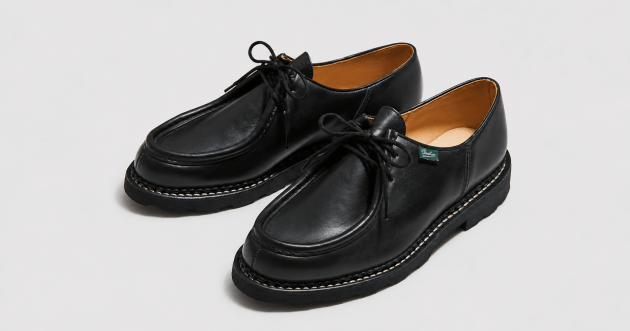
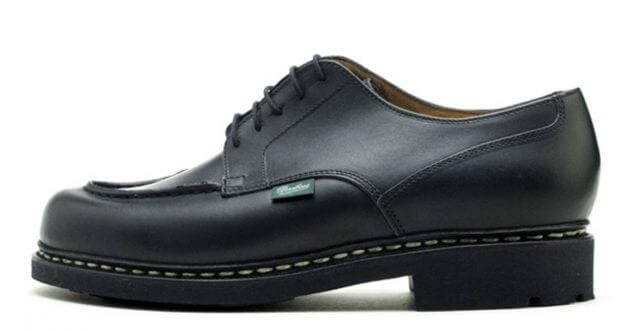
The Lance, Michaelle, and Chambord are all classic Paraboot models that use squirrel leather and the Norwegian manufacturing method. Their appearance and compatible outfits are different from each other. The Lance is the only coin loafer among the three models. While maintaining the elegance of a loafer, its chunky form and thick-soled sole create a rugged atmosphere, making it a good choice for those who find ordinary loafers insufficient. The Mikael is a representative model not only of Paraboot but also of all Tyrolean shoes, and its thick mocca stitching and rounded form give it a particularly strong presence among the three models. It is a strong choice for those who are looking for an accent or a more voluminous pair for their feet. The Chambord is a U-tip with an external shuttlecock and, in contrast to the Lance and Mikael, the mocca part is ” ogamamocha, ” the neatest of the three models, and is recommended for more dressy outfits.
What is Paraboot?The French shoe brand that developed the world's first rubber sole for leather shoes
Paraboot is a French shoe brand founded in 1908. It began as a small shoe workshop opened by Remy Richard Ponvert, who made shoes and mountaineering boots for the upper class in Paris.In 1926, when the founder, Mr. Ponvert, traveled to the U.S., he developed rubber-soled shoes, inspired by the rubber boots worn by Americans. He became the first brand to adopt rubber soles for leather shoes. The brand name “Paraboot” comes from the fact that natural latex, a rubber material, was imported from the Brazilian port of Para.

Paraboot, the creator of rubber soles, still manufactures its own soles. The soles, made from 100% natural latex using a unique rubber synthesis process, are still going strong 100 years after their birth. Although there are many leather shoe brands around the world, Paraboot is the only one that manufactures its own outsoles from the raw material stage. Their robustness and practicality are such that they are designated as military shoes by the French Navy. The brand has developed rubber soles that bring out the best in shoes, such as the “PARA-TEX” rubber sole for the “Chambord” U-tip, which is very popular in Japan, and the “MARCHE II” rubber sole for the “MICHAEL” and “Lance” loafers, which are popular in France.
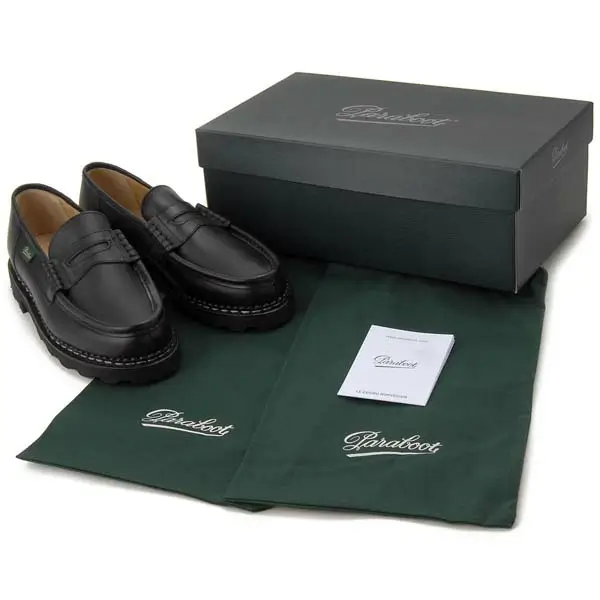
Of course, the company is also proud of its top-class technology in manufacturing other than soles. By making full use of the Norwegian manufacturing method, a method derived from mountaineering shoes, the company has achieved overwhelming durability and robustness. The use of oil-rich squirrel leather for the upper is also unique to Paraboot. The manufacturing method has been inherited unchanged since the 1900s, and there are more than 150 processes involved in the creation of a single pair of shoes. A total of 200 craftsmen make 350,000 pairs of shoes a year at two factories in France, in Izaud and Huret.

![4 Double-Breasted Jackets to Add a Touch of Elegance to Your Outfit [Featuring Styles Perfect for Casual Wear]](https://otokomaeken.com/wp-content/uploads/2026/10/a4a5d61cb1a2123f1a289f5af5e9a9b1-750x396.png)
![20 luxury down jackets [ from high brands to outdoor brands ] 2025-26 Latest](https://otokomaeken.com/wp-content/uploads/2025/11/cc5d606272a09a29b0f0289a9fb08d6b-750x397.jpg)